Thinking Beyond Grey: A Guide to Coloured Concrete in Brisbane
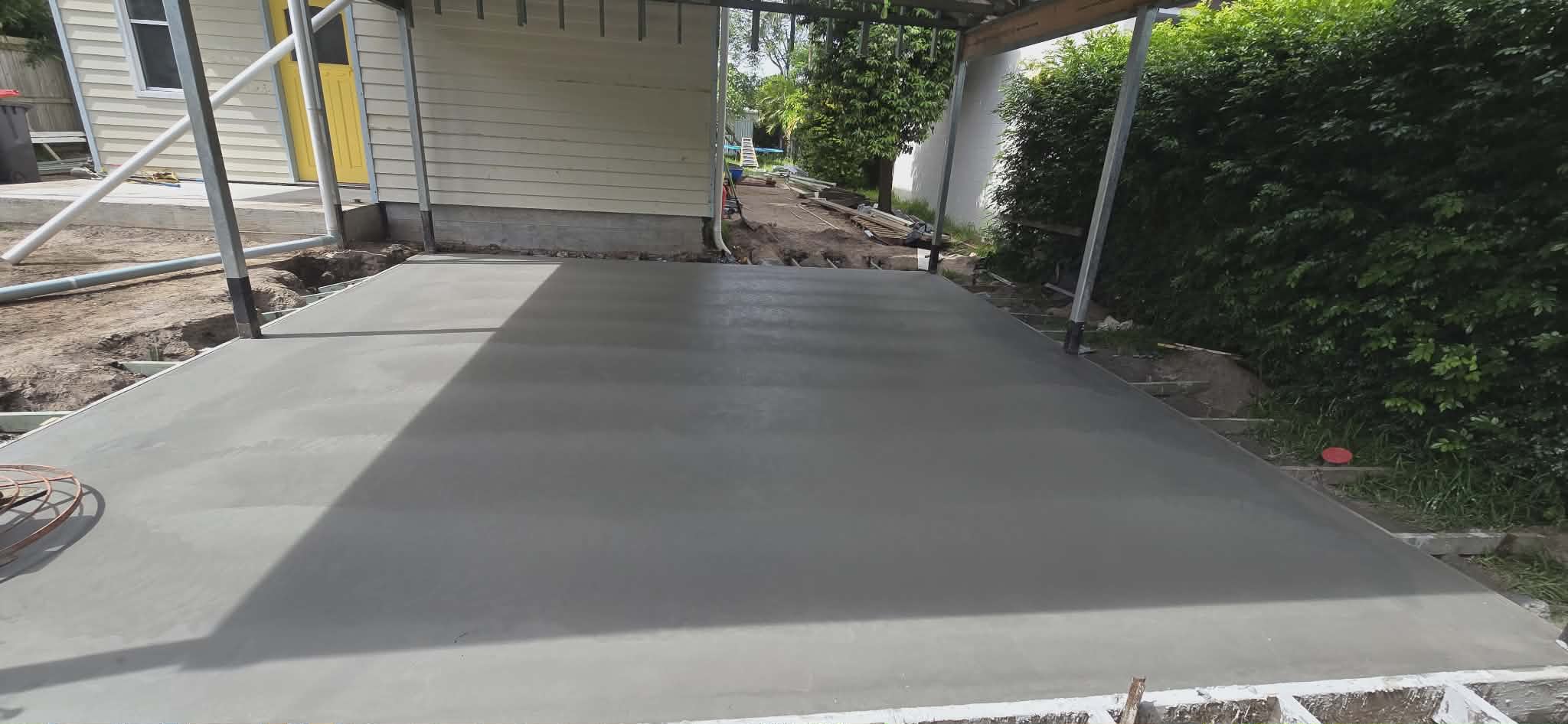
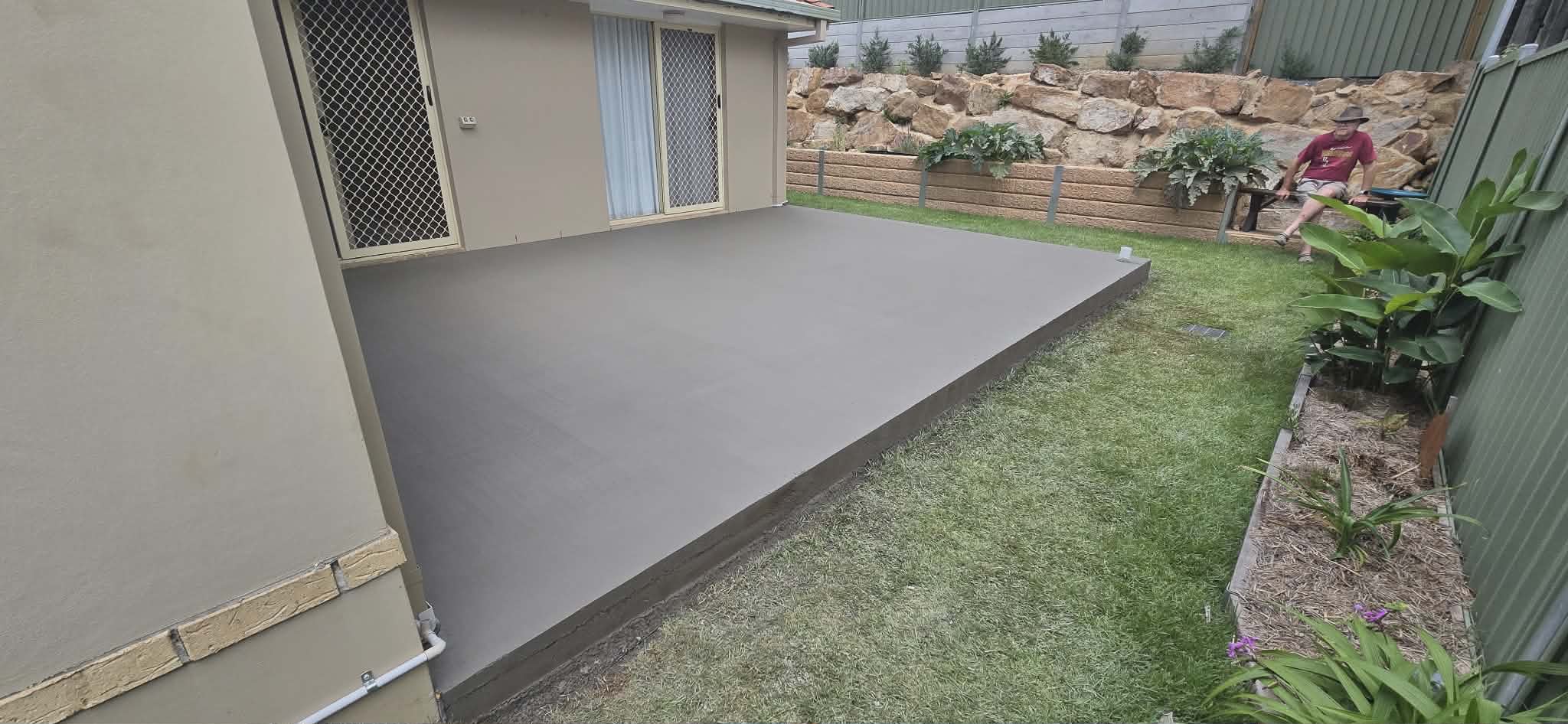
When you picture concrete, you probably think of a plain, utilitarian grey slab. But what if your concrete could be a design feature in its own right? Coloured concrete is one of the most effective ways to elevate the look of your Brisbane home, turning a simple concrete driveway or patio into a sophisticated and welcoming space. It’s a durable, versatile, and stylish choice that’s perfectly suited to the Queensland lifestyle.
As Brisbane’s trusted concreting experts, the team at Concrete Concepts Group has spent years mastering the art and science of coloured concrete. We know what works best in our city’s unique climate and what it takes to achieve a beautiful, long-lasting finish. This guide will walk you through the most popular methods for colouring concrete—integral colours, colour hardeners, and stains—to help you decide which is the perfect fit for your project.
Why Choose Coloured Concrete for Your Brisbane Home?
Beyond the obvious aesthetic upgrade, there are several practical reasons why Brisbane homeowners are increasingly choosing coloured concrete for their properties.
- Unmatched Kerb Appeal: The right colour can dramatically enhance your home's exterior, complementing its architectural style and landscaping. A charcoal-coloured driveway can create a bold, modern statement, while a sandy, earth-toned patio can blend seamlessly with a lush, subtropical garden.
- Built for the Brisbane Climate: Our city’s weather can be tough on building materials. From the intense summer sun to heavy seasonal rains, you need a surface that can handle it all. Coloured concrete, especially when professionally installed and sealed, is incredibly resilient. Integral colours are UV stable and won’t fade, while a quality sealer protects against moisture and staining.
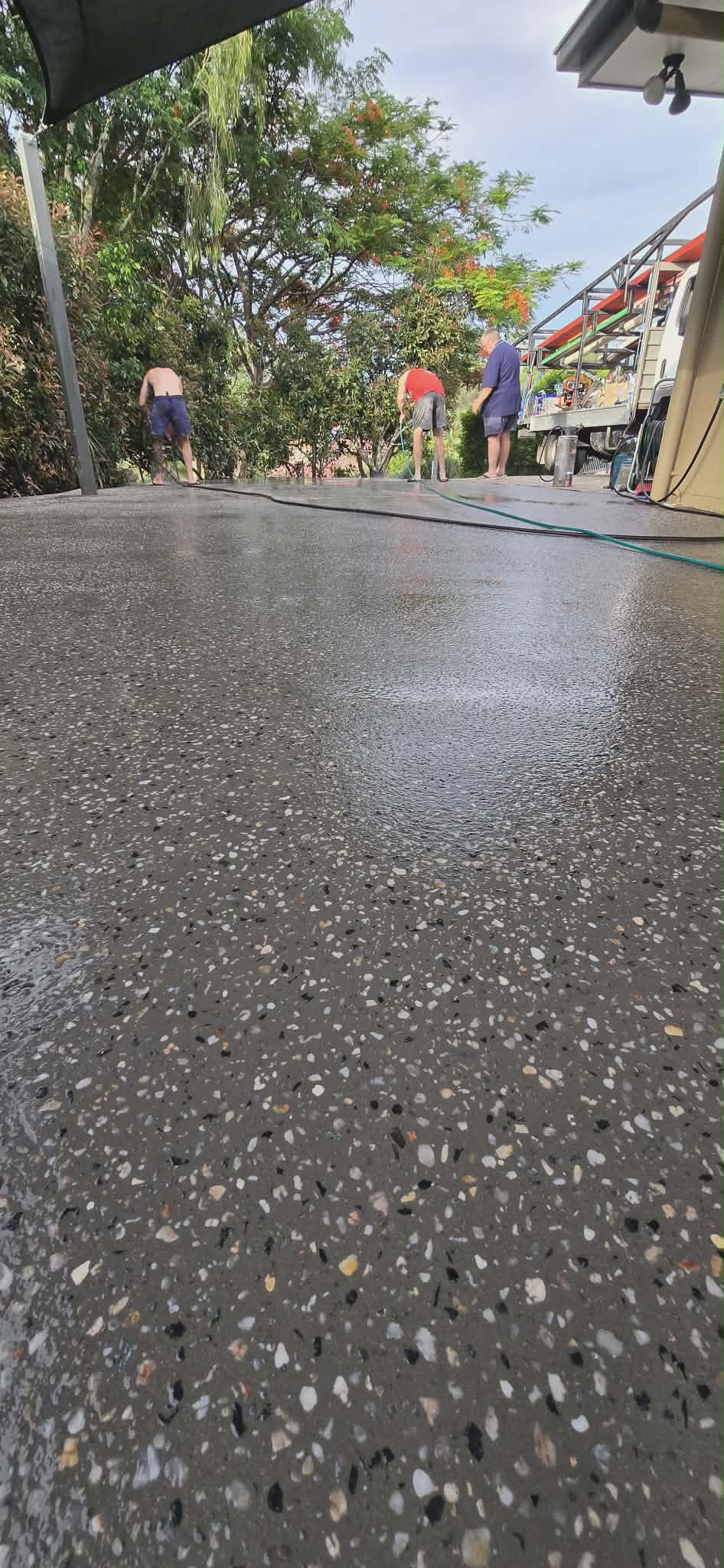
- Versatility by Design: Coloured concrete isn’t just for driveways. It’s a fantastic choice for a wide range of applications, including concrete patios, pool surrounds, pathways, and even indoor floors. It can be paired with other decorative techniques like exposed aggregate to create a truly custom look.
- Low Maintenance Living: Once sealed, a coloured concrete surface is incredibly easy to look after. It resists stains from dirt, leaves, and car oils, and a simple sweep and occasional wash is all it takes to keep it looking its best. This means more time enjoying your outdoor space and less time on upkeep.
The Methods: How to Add Colour to Concrete
There are three primary ways to colour concrete, each with its own unique process, benefits, and ideal applications. Let's break them down.
1. Integral Colour (Oxides)
Integral colour is the most common method for colouring new concrete. It involves adding fine mineral oxide pigments to the concrete mix at the plant before it’s delivered to your site. The colour is distributed evenly throughout the entire volume of the concrete.
- The Process: The pigment is measured by weight and mixed directly into the concrete truck’s drum. This ensures a consistent, uniform colour from the bottom of the slab to the top.
- Colour Effect: This method produces a soft, natural, and earthy colour palette. Think warm terracotta, subtle tans, and various shades of grey and charcoal. Because the pigment is throughout the slab, the colour is permanent and won't chip or wear away.
- Pros:
- Permanent, fade-resistant colour.
- Consistent colour through the entire slab.
- Cost-effective and efficient for new pours.
- Cons:
- Limited to a more natural, earthy range of colours.
- Slight variations can occur between different concrete batches.
- Best For: New concrete projects where a durable, long-lasting, and natural-looking colour is desired. It's the go-to choice for most concrete driveways, pathways, and large concrete slabs.
- Brisbane Price Guide: Typically adds $30 - $60 per cubic metre to the cost of standard concrete.
2. Colour Hardeners (Surface-Applied Colour)
Colour hardeners are a blend of fine cement, sand, pigments, and surface-conditioning agents. This dry powder is broadcast evenly over the surface of freshly poured, still-wet concrete and then worked into the top layer with a trowel.
- The Process: After the concrete is placed and screeded, the colour hardener is shaken onto the surface. It absorbs moisture from the concrete, and is then floated and trowelled into the slab, creating a dense, coloured layer about 3-4mm thick.
- Colour Effect: Colour hardeners produce a much more intense, vibrant, and consistent colour than integral pigments. The colour is concentrated at the surface, resulting in a bolder finish.
- Pros:
- Wide range of vibrant, rich colours available.
- Creates a harder, denser, and less permeable surface.
- Excellent for high-traffic areas.
- Cons:
- Only a surface coating; if the slab chips deeply, the grey concrete beneath will be exposed.
- More labour-intensive to apply correctly.
- Best For: Projects requiring a very strong, uniform colour or enhanced surface durability. It's often used for stamped concrete to help the pattern stand out, as well as for commercial floors and high-traffic driveways.
- Brisbane Price Guide: Generally more expensive than integral colour due to the additional product and labour, adding approximately $15 - $25 per square metre.
3. Concrete Stains (Acid and Water-Based)
Unlike integral colours and hardeners, which are used on new concrete, stains are applied to existing, fully cured concrete. They penetrate the surface to create a unique, translucent finish.
- Acid Stains: A solution of water, hydrochloric acid, and metallic salts. The acid lightly etches the surface, allowing the metallic salts to react with the lime in the concrete. This chemical reaction creates a permanent, marbled, and variegated colour.
- Water-Based Stains: A blend of acrylic polymers and pigments that penetrate the concrete's pores without reacting chemically. They offer a broader and more predictable colour palette than acid stains.
- Colour Effect: Stains produce a one-of-a-kind look. Acid stains result in earthy tones like tans, browns, and soft blue-greens with a beautiful, mottled appearance. Water-based stains can achieve more opaque and uniform colours.
- Pros:
- Can revitalise old, plain concrete.
- Creates a unique, high-end decorative finish.
- Wide range of effects possible, from subtle to dramatic.
- Cons:
- The final look is less predictable and depends on the concrete's composition and porosity.
- The surface must be thoroughly cleaned and prepared.
- Can be slippery if not sealed with a non-slip additive.
- Best For: Transforming existing concrete surfaces like patios, walkways, interior floors, and even retaining walls. Perfect for achieving an artistic, custom look.
- Brisbane Price Guide: Staining is a multi-step process and costs can vary widely, but typically range from $40 - $90 per square metre, including preparation and sealing.
Coloured Concrete Methods: A Comparison
To help you choose, here’s a quick comparison of the different methods:
| Feature | Integral Colour (Oxides) | Colour Hardener | Concrete Stains (Acid & Water-Based) |
|---|---|---|---|
| How it's Applied | Mixed into the concrete pre-pour | Broadcast onto fresh concrete | Applied to the surface of cured concrete |
| Colour Effect | Subtle, natural, earthy tones | Vibrant, intense, uniform colour | Translucent, marbled, variegated |
| Durability | Excellent (colour is full-depth) | Very Good (creates a hard crust) | Good (penetrates the surface) |
| Best For | New driveways, paths, large slabs | Stamped concrete, high-traffic | Revitalising existing patios, floors |
| Cost Guide (AUD) | $ | $$ | $$$ |
Choosing the Right Colour for Brisbane's Light and Landscape
In Brisbane, our bright, subtropical sunlight plays a huge role in how colours appear. A colour that looks perfect on a small sample can feel completely different across a large concrete driveway.
-
Light, Cool Colours: Lighter shades like off-white, sand, and light grey are fantastic for pool surrounds and concrete patios. They do a much better job of reflecting the sun's heat, keeping the surface cooler underfoot during a scorching summer day. These colours create a relaxed, coastal feel that complements modern Brisbane architecture and light-coloured home exteriors.
-
Dark, Bold Colours: Charcoals, deep browns, and dark greys create a strong, contemporary look that provides a stunning contrast to lush green lawns and landscaping. While they absorb more heat, they are excellent for driveways and can make a powerful design statement. They are also very effective at hiding minor stains from oil or tyres.
-
Earthy and Natural Tones: You can never go to wrong with colours that mimic the natural environment. Terracottas, warm tans, and muted browns blend beautifully into the leafy suburbs of Brisbane, complementing the brick and timber homes common in the area. These colours provide a timeless appeal that won't go out of style.
Don't Forget the Sealer: Protecting Your Investment
No matter which colouring method you choose, sealing the concrete is a non-negotiable final step. A high-quality sealer is essential for protecting your investment and keeping it looking great for years to come, especially in our harsh Queensland climate.
A sealer will:
- Protect from UV Rays: Prevents the colour from fading in the relentless Brisbane sun.
- Prevent Stains: Creates a barrier against oil, dirt, fallen leaves, and bird droppings.
- Enhance the Colour: Deepens and enriches the colour, giving it a vibrant 'wet' look or a subtle sheen.
- Improve Safety: A sealer can be mixed with a non-slip additive, which is crucial for pool surrounds, sloping driveways, and pathways.
We recommend resealing your coloured concrete every 2-3 years to maintain its appearance and protective qualities.
Frequently Asked Questions
How long does coloured concrete last?
When installed and sealed correctly, the colour in integrally coloured concrete is permanent and will last the lifetime of the slab itself. Surface-applied colours and stains are also very durable, but may require re-sealing every few years to maintain their vibrancy, and deep chips in a surface-hardened slab can reveal the grey concrete underneath.
Can you change the colour of existing concrete?
Absolutely! If you have a plain grey slab, you can use concrete stains (both acid and water-based) to completely transform its appearance. You can also apply a concrete resurfacing compound, which can be integrally coloured, over the top of an existing slab, provided it is in good condition.
Is coloured concrete more expensive than plain concrete?
Yes, there is an additional cost for the pigments and, in some cases, the extra labour required for application. However, the significant boost in kerb appeal and property value makes it a worthwhile investment for most homeowners. Integral colour is the most budget-friendly option, while staining and colour hardeners are more of a premium choice.
Is coloured concrete slippery?
Any concrete surface can become slippery when wet. However, this is easily managed. During the sealing process, we can include a non-slip additive, which creates a slightly gritty texture that provides excellent grip underfoot. This is a standard and highly recommended practice for all outdoor flatwork, especially around pools and on sloped areas.
Ready to Add Some Colour to Your Home?
Choosing the right colour and method for your concrete project can feel overwhelming, but it doesn’t have to be. The experienced team at Concrete Concepts Group is here to help you every step of the way. We’ll provide expert advice, show you colour samples, and help you find the perfect solution to match your home, budget, and style.
For a free, no-obligation quote on your coloured concrete project, call us today on 0424 463 268!
Get a Free Quote for Your Project
No obligation — we'll call you within 24 hours to discuss your needs.
Concrete Concepts Group
QBCC Licensed (#15299707) concreting professionals serving Brisbane and all surrounding areas. Over 100 projects completed with a 5-star reputation.
Explore Our Services
We Service These Brisbane Areas
Homeowner's Guide to Concreting
13-page guide covering finishes, costs, council requirements, and maintenance tips for Brisbane homeowners.
Download Free